



Good morning, Night City! Four years since David Martinez and his chromed-out cohort gave Arasaka a run for its eddies, we’re back on the streets, where the body count remains awful and the cost of existing worse! Cyberpunk 2077 has undergone a miraculous rehabilitation, courtesy of enough patch updates and a sprawling Phantom Liberty expansion to make its launch-day catastrophe one of gaming’s great redemption stories! Meanwhile, Ghost in the Shell has returned through Science SARU, Prime Video’s Blade Runner 2099 is touching down next month, and William Gibson’s Neuromancer is finally getting its Apple TV moment in January. The future (daresay the present), ladies and gentlemen, is looking absolutely dystopian, and the entertainment industry has never been more bleak!
For the handful of cyberpunk devotees who were impressed by my thoroughly shoddy impression of Cyberpunk 2077’s iconic radio jockey intro, and the considerably larger contingent of uninitiated readers wondering whether I’ve suffered a stroke; the genre has been having something of a moment lately, thanks in no small part to the real world making steady attempts to outdo it. But the crown jewel that has had people like me practically mainlining copium in anticipation all year is Studio Trigger’s long-awaited follow-up to its Anime of the Year-winning Cyberpunk: Edgerunners.
Born in Mike Pondsmith’s tabletop RPG, immortalised in CD Projekt Red’s sprawling videogame, and subsequently given a spectacularly violent animated makeover by Studio Trigger, Night City has become one of sci-fi’s most recognisable monuments to humanity’s capacity for self-sabotage. It is a dystopian, hypercapitalist hellscape where corporations like Arasaka wield more power than governments and the human body is just another depreciating asset awaiting its next absurd upgrade. The first season followed a gang of rebellious mercenaries AKA ‘Edgerunners’ as they took increasingly suicidal gigs and eventually found themselves on a collision course with Arasaka that could only end in tragedy. After all, there are no happy endings in Night City… or so we were led to believe.
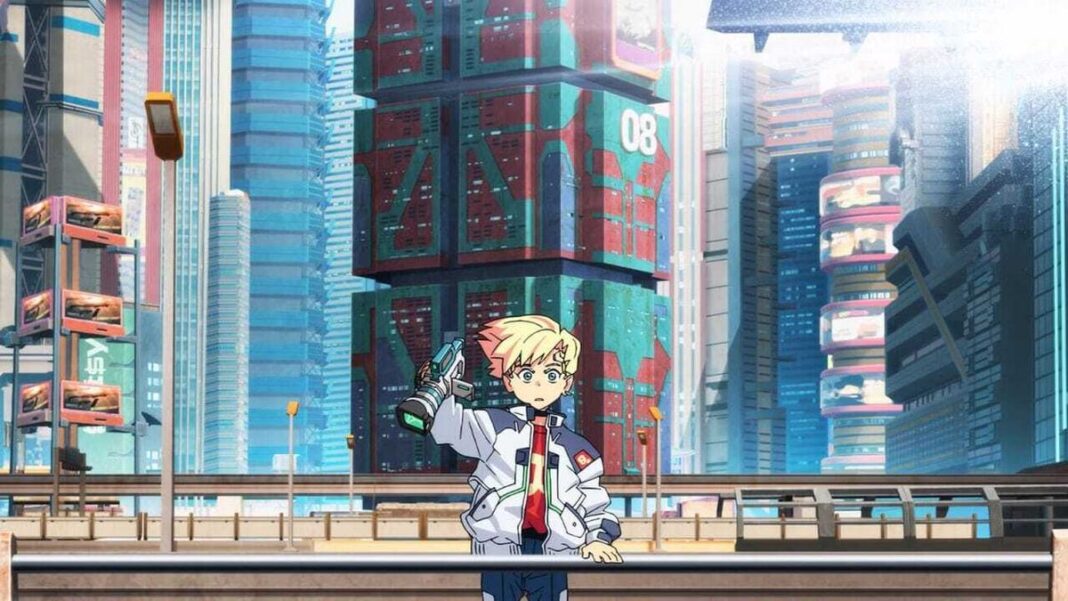
Set three years after the first season and a year after the events of the videogame, Cyberpunk: Edgerunners 2 returns to Night City with an entirely new cast of walking liabilities. Roman Carax is a 12-year-old aspiring filmmaker who prefers his analogue camera to the brain-rotting convenience of Braindances; D is a vengeful netrunner whose Nomad clan was massacred; Talia is a young woman replacing her failing body with disturbing amounts of chrome; and Weak Kingsley, once the celebrated edgerunner King, is attempting to rebuild his life after surviving cyberpsychosis at the cost of the augmentations that made him formidable.
Cyberpunk: Edgerunners 2 (Japanese/English)
Creator: Bartosz Sztybor and Masahiko Otsuka
Cast: Koki Uchiyama, Momoka Terasawa, Akari Kito, Kentaro Tone, Akemi Okamura, Brittany Lauda
Episodes: 10
Runtime: 25-30 minutes
Storyline: A vengeful Nomad netrunner, a young filmmaker, a chrome-obsessed young woman, and a fallen edgerunner struggling to rebuild his life, converge amid Night City conspiracies
Despite the subtitle, Edgerunners 2 couldn’t care less about edgerunning, abandoning its predecessor’s fixer-economy ladder-climbing and doomed pursuit of mercenary immortality for a more incisive autopsy of the psychological inducements and hideously personal costs of chroming. This sequel throws together four protagonists who share neither a crew nor a coherent set of interests, through a bunch of narrative happenstance.
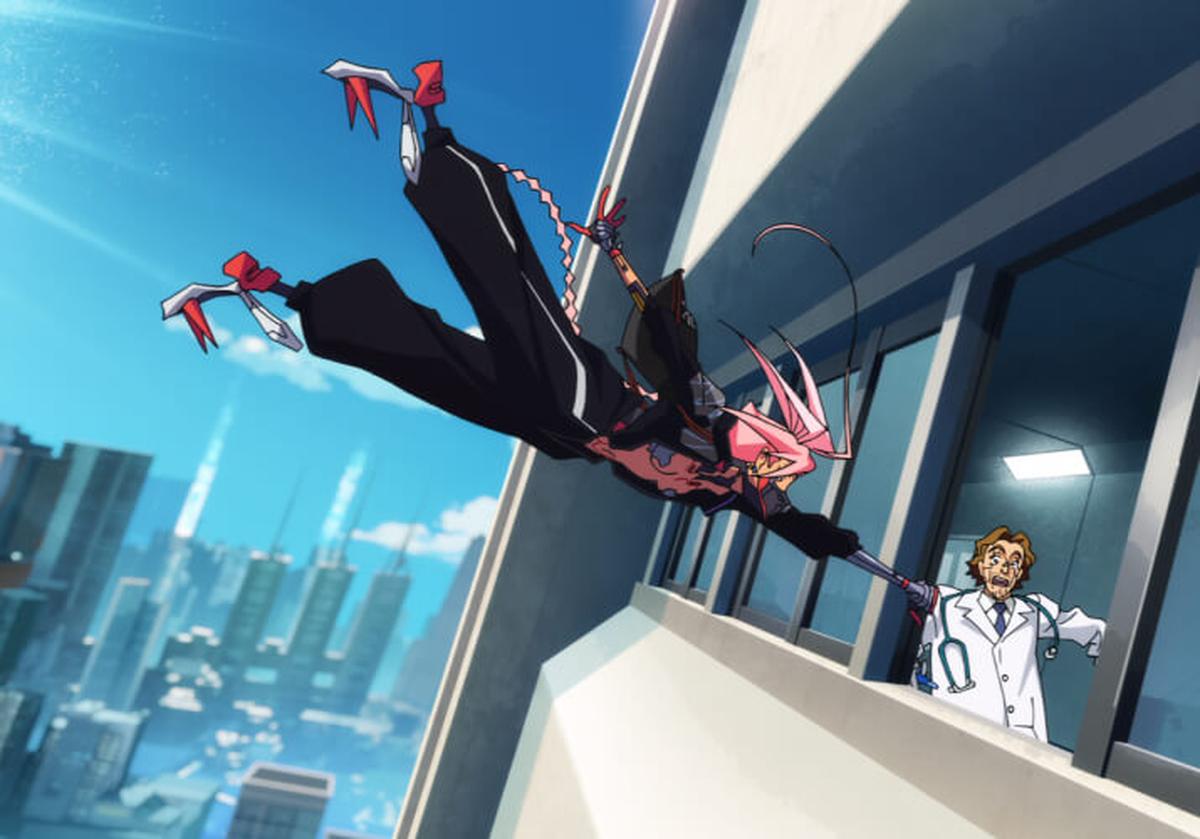
Weak Kingsley’s introduction establishes just how close he is to cyberpsychosis, forcing him to chrome down to prevent another episode. The prospect of becoming an obsolete relic without the hardware that furnished his reputation proves so intolerable that he attempts suicide, until a former flame Avida, interrupts his exit strategy by asking for his help. His ensuing arc keeps circling the question that David’s story could never quite afford to entertain: who the hell are you when the chrome comes off? Losing his augmentations does mean losing the very thing that made him somebody, but it eventually gives him the freedom to find his own meaning in life, untethered from the legend he once was.

Talia’s predicament is the inverse of Weak’s — while he has to figure out who he is without his chrome, she is unable to imagine herself without hers. She begins augmenting herself to treat her condition, but as more of her flesh gives way to machinery, the distinction between medical necessity and personal compulsion grows murkier by the episode. Chroming becomes her means of coping with trauma, a way of feeling powerful enough to finally be fully herself, even as that pursuit takes a brutal toll on the very body she is trying to reclaim. The season probes this vicious oscillation between chrome as an act of self-preservation and body dysmorphia as a licence for extraordinary acts of self-directed contempt.
A still from ‘Cyberpunk: Edgerunners 2’
| Photo Credit:
Netflix
One of the season’s highlights is the internet’s ‘Cyber Sasuke’ D, a brooding teenage netrunner with unresolved trauma and a blood oath against the people who massacred his Nomad clan. He begins the season chasing vengeance and answers, with enough anguished emo energy to slot comfortably alongside Sasuke Uchiha, Megumi Fushiguro, Shoto Todoroki and Zuko in the prestigious lineage of fictional boys who desperately need somebody to talk to. But D’s story gradually outgrows its revenge complex, becoming an interrogation of what freedom actually means in a city that dictates even the terms of your rebellion.
D’s serendipitous encounter with Capri, an experimental digital construct that manifests inside his head, gives the season its most unexpectedly compelling relationship to excavate. Where Cyberpunk 2077 saddled players with Keanu Reeves’ sardonic Johnny Silverhand, a digital squatter who spent much of his tenancy encouraging you to blow up Arasaka; Edgerunners 2 gives us a sprightly, pixelated anime girl whose frolicsome disposition and appetite for chaos make her considerably more fun to have around. The human-machine relationship is one of the season’s more intriguing preoccupations, with Capri offering D the feeling of being understood and seen. There are shades of Samantha in Her and Joi in Blade Runner 2049 in this intimate companionship, along with a rather timely question about the parasocial attachments we are already forming with artificial life. And yet, for all the existential queasiness of watching a traumatised teenager find solace in a being whose inner life remains tantalisingly unknowable, their chemistry is disarmingly tender — I couldn’t help but root for them? I’m still working out whether that makes me naively sentimental or just profoundly stupid; perhaps both.

A still from ‘Cyberpunk: Edgerunners 2’
| Photo Credit:
Netflix
But the beating heart of Edgerunners 2 is unquestionably Roman. The precocious 12-year-old cinephile is a conduit through whom the series articulates some of its most incisive observations on art in the age of AI, with an early piece of writing distilling his entire artistic philosophy very eloquently:

“In Braindance, nothing separates the audience from the action. It’s just one layer deep. But film has a screen. It acts like a boundary. One you’re supposed to cross, so you forget it was ever there. Stories transport us. That’s why they matter. That’s why we still need them”Roman CaraxCyberpunk: Edgerunners 2
Between tailing D to capture Nightcrawler-style LiveLeak carnage, splicing narco-executions into grisly montages, and taking an earnest interest in preserving the spark in his friends’ eyes at their happiest, Roman is a fascinating character study in what the lens does to the person behind it. It’s a question Lance Oppenheim’s Primetime has already probed, and Nathan Fielder’s much-anticipated You Can See Everything will soon revisit, but in Night City, where the line between snuff, Mondo, exploitation and documentary is practically non-existent, Roman remains stubbornly committed to making art for art’s sake.
There’s also a lovely streak of analogue-media evangelism running through the season, from Roman’s excitement at the prospect of shooting on 35mm to the early-2000s DVD-era nostalgia baked into its visual grammar, right down to that bouncing DVD screensaver outro. I also refuse to believe the fact that Night City’s three great corpo nightmares — David Martinez (2075), V (2077) and David (2078) — spelling out DVD, isn’t a mere coincidental spit in the face of the streaming economy.

Across its ten episodes, I’ve lost count of how many times Studio Trigger left me gawping at the screen, with images I wouldn’t know how to conjure in my most feverishly elaborate dreams. The fluidity, ferocity, obsessive detail and deranged editing are among the finest I’ve witnessed all year, and given the competition 2026 has thrown up, that is no small achievement. But it’s Kai Ikarashi’s direction and shot composition that elevate the spectacle beyond an exercise in technical one-upmanship. Having already established himself with the extraordinary sixth episode of season one, “Girl on Fire”, Ikarashi pushes Trigger’s rendering of Night City to dizzying new heights, marrying ultra-stylised character designs and outrageously kinetic action with the grainy, paranoia-soaked found-footage frames of Roman’s camera. The key frames, production design, background art and sheer audacity of the visual language work in concert to make Edgerunners 2 one of the year’s most astonishingly realised animated productions.

A still from ‘Cyberpunk: Edgerunners 2’
| Photo Credit:
Netflix
Of course, what makes all that visual lacquer unmistakably Cyberpunk is the exquisite misery it’s been applied to conceal, because Night City has never met a gorgeous frame it couldn’t use to make somebody’s suffering look spectacular. D’s slow capitulation to his own fate carries shades of Eren Jaeger’s terminal fatalism, while Roman and Talia’s budding relationship has that Your Lie in April flavour of impending heartbreak. The unfairness of it all made me inconsolable. These are just a bunch of kids trying to decipher their place in a world, but the crippling nihilism of Night City moulds, radicalises, exploits and, all too often, turns them into weapons.
And so, if you told me Edgerunners 2 was essentially a brilliantly disguised bildungsroman about a boy learning to love the act of creation in a world drowning in mass-produced cultural landfill; and how that love for the messiness of human experience might yet save something worth saving, I would burst into tears all over again. I think a lot of people miss what this story is getting at, and more broadly, what cyberpunk has always been about beyond the fetishistically rendered hypercapitalism. This is, in many ways, an unbecoming of cyberpunk, and a rejection of the genre’s self-destructive fixations in favour of the almost radical act of choosing to live. If season one was about dying for the people you love, season two is about learning to live for them.

The most powerful argument Edgerunners 2 makes is that even in a civilisation drowning in technofascism and algorithmically dispensed slop, the love of art and the need for human connection remain stubbornly irreducible. Its aggressively hopecore sensibilities crystallise in that cheeky final shot, when a piece of airborne rubbish smacks Roman in the face and he simply grins — Night City may do its best to suck the very soul out of you but it cannot quite extinguish the impulse to create, to feel, to find something worth preserving, and to simply, love. The indomitable human spirit is a phrase that has been flogged to death by considerably less deserving stories, but here it earns its keep.

A still from ‘Cyberpunk: Edgerunners 2’
| Photo Credit:
Netflix
It sounds borderline cyberpsychotic to say a series set in Night City restored my faith in humanity. That Edgerunners 2 can wring such tenderness, such an unembarrassed belief in art and human connection, from a world so thoroughly committed to grinding both into dust is precisely what makes it one of the finest things television has given us this year.
Cyberpunk: Edgerunners 2 is streaming on Netflix